
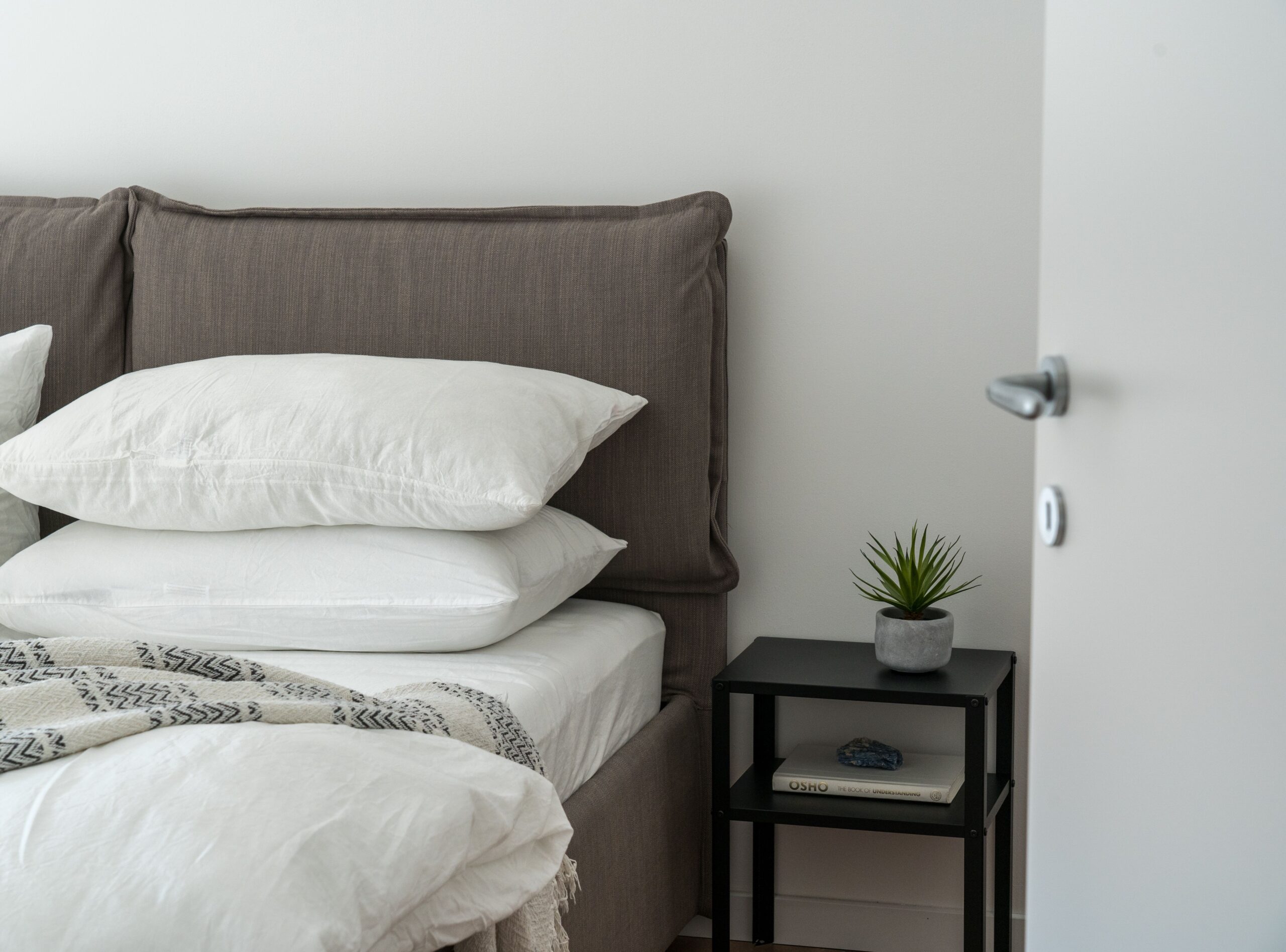
There is a specific feeling that the best hotel rooms create within the first thirty seconds of entering them. The temperature is right. The light is warm and layered. The bed looks like it was made by someone who thought carefully about every layer of it. The surfaces are clear of anything that doesn’t belong. The materials feel considered, from the weight of the door handle to the texture of the carpet underfoot. And the whole room communicates, without saying anything explicitly, that someone thought carefully about how it would feel to be in this space and made every decision in service of that feeling.
Most people experience this quality in hotel rooms and accept that it belongs there, in a category of space that has professional design resources and hospitality budgets behind it. What fewer people recognise is that the qualities that make the best hotel rooms feel the way they do are not the product of budget. They are the product of specific, learnable design decisions that can be applied in a home master bedroom at a fraction of the cost of the hotel room that demonstrates them.
The master bedroom is the room in any home that most directly affects daily wellbeing. The quality of sleep it supports. The ease of the morning routine. The sense of retreat it provides at the end of a demanding day. Getting it right is not a luxury aspiration. It is a quality-of-life investment that pays returns every single morning and every single evening for as long as the room is used.
At LifeSpace Interiors & Decors, master bedroom projects are among the most rewarding we work on, because the design thinking that produces a hotel-quality bedroom is specific, achievable and has an immediate and personal impact on the daily life of everyone who sleeps in it.
The Bed Is the Room and the Room Is Built Around the Bed
Every design decision in a master bedroom that feels like a five-star hotel begins from the same starting point: the bed is the primary element and the room is built around it. Not built around the television. Not built around the storage. Not built around the view, although the view matters. The bed. Because everything the room is for, rest, restoration, the transition between the demands of daily life and the recovery that sleep provides, is served or undermined by the quality of the bed and its relationship to everything else in the room.
The bed platform itself, the frame or base, should be substantial enough to anchor the room visually. A low, minimal platform in timber or upholstered fabric, sized proportionally for the room, creates a presence in the space that a standard divan base never achieves. The headboard should be large, ideally extending from near the floor to a height that creates a genuine backdrop for the bed rather than a small panel floating behind the pillows. A floor-to-ceiling headboard wall, whether upholstered, panelled in timber or finished in a deep accent colour, is the single most hotel-like detail available in any bedroom and the one most consistently absent from Indian home bedrooms.
The mattress quality is non-negotiable in a hotel-quality bedroom. A quality mattress in the correct tension for the primary sleeper, replaced when it no longer provides adequate support rather than kept beyond its useful life for reasons of economy, is the foundation of the sleep quality that the room is designed to support. Everything else in the room, the lighting, the materials, the temperature control, serves the quality of sleep. The mattress determines it more directly than any of them.
Hotel-quality bedding, cotton with a thread count of 300 or above, in white or near-white for the primary sheets and pillowcases with texture and colour introduced through the throw and the decorative cushions, creates a bed that looks like it was made by a professional and feels like it was made for you. The quality difference between hotel-grade cotton and standard bedding is immediately and physically perceptible, and it changes the daily experience of getting into bed from a routine conclusion to a small but genuine pleasure.
The pillow configuration of a well-made hotel bed is worth replicating exactly. Two firm support pillows per side for sleeping, with two or three softer decorative pillows stacked in front of them to create the layered, generous appearance of a fully made bed. The support pillows go behind the decorative ones when the bed is dressed and come forward when it is used. This simple organisation produces the hotel bed appearance without requiring any special skill or expensive materials.
At LifeSpace Interiors & Decors, the bed and its immediate environment are the first design decisions made in every master bedroom project, with everything else planned in relation to them. Explore our design visualization services to see how the bed position, the headboard treatment and the overall bedroom composition are developed in 3D before any construction or furniture decisions are finalised.
Lighting That Makes Everything Look Better
The lighting in a five-star hotel room does something that the lighting in most Indian master bedrooms does not: it makes the room look better and the people in it look better simultaneously. This is not an accident. It is the result of lighting designed around warm colour temperatures, layered sources and the specific quality of light that the human visual system finds most flattering and most restful.
The colour temperature of every light source in a hotel-quality bedroom should be consistently warm, in the 2700K to 3000K range that produces the amber-toned light associated with candlelight, incandescent bulbs and the warm end of the LED spectrum. This warm light flatters skin tones, makes materials look richer and creates the psychological conditions for relaxation that cooler, bluer light actively undermines.
The layering of light sources is what gives a hotel bedroom its atmospheric flexibility. The ambient layer, from a ceiling fixture on a dimmer, provides the general brightness needed for moving around the room and getting dressed. The bedside layer, from lamps or wall-mounted reading lights on each side of the bed, provides the intimate, directed light for reading and winding down. The accent layer, from concealed LED strips behind a bedside panel, beneath the bed platform or along the base of the headboard wall, provides the low, warm glow that creates atmosphere without requiring the main lights to be on. These three layers operated independently through dimmer controls give the bedroom the full range from brightly functional to deeply atmospheric without requiring a single fitting to be changed.
The bedside lighting deserves particular attention. A hotel room provides bedside light that is warm, directional and controllable from the lying position without requiring the occupant to get out of bed to turn it off. Wall-mounted reading lights with individual switches at each side of the bed, or bedside lamps with accessible switches on the lamp body, replicate this hotel standard. The ability to control all the lights in the room from the bed, including the main ambient light, through a bedside panel or a smart home system, is the complete version of the hotel lighting standard and one that transforms the daily experience of the bedroom from the first evening it is used.
See how our turnkey projects integrate bedroom lighting design from the planning stage as a primary atmospheric consideration rather than a product selection made after the room is otherwise complete.
Storage That Disappears and a Room That Breathes
The most consistent visual difference between a hotel room and a home bedroom is the amount of visible stuff in each. A hotel room has almost nothing on its surfaces. The home bedroom has the accumulated evidence of daily life on every available surface, things that don’t have a specific home, things that are in transit between somewhere and somewhere else, things that were put down temporarily and have been there for six months.
This difference is not about the hotel having less stuff. It is about the hotel having designed storage for everything that needs to be stored and having a system, implemented by the housekeeping team, for ensuring that everything is in its storage place when the room is used. The home bedroom can achieve the same result with the same two components: adequate storage for everything that needs to be in the room, and a maintenance routine that returns everything to its storage place at the end of each day.
The storage in a hotel-quality master bedroom is built-in, generous and designed for the specific wardrobe and personal storage requirements of the people who use it. A floor-to-ceiling wardrobe system across the full width of one wall, with the right combination of hanging space, shelving, drawers and dedicated storage for accessories, shoes and seasonal items, is the storage specification that makes tidiness effortless rather than effortful. When everything has a specific place, putting things away takes seconds rather than minutes, and the room maintains the visual calm that hotel rooms have as their default condition.
The television in a hotel-quality master bedroom is integrated into the design rather than placed on a surface that wasn’t designed for it. A television mounted on the wall at the correct viewing height from the bed, with all cables concealed within the wall and the wall surface designed to accommodate the television as a visual element rather than treating it as an intrusion, creates the clean, considered appearance of a hotel room television position. A television sitting on a chest of drawers surrounded by visible cables communicates the opposite.
Custom wooden storage built to the exact dimensions of the master bedroom is the specification that most reliably delivers the built-in quality that a hotel-quality bedroom requires. A wardrobe system designed to the precise ceiling height of the room, with internal configurations specified for the actual wardrobe requirements of the specific household, delivers a quality of fit and function that ready-made wardrobes cannot replicate. Read more about how custom wooden furniture transforms master bedroom storage and why it is consistently the more effective specification for rooms where the quality of the storage directly affects the quality of the overall environment.
Materials and Finishes That Feel Considered
The materials in a five-star hotel room have been chosen for how they feel as much as for how they look. The carpet underfoot that absorbs the sound of footsteps and provides the softness that hard flooring doesn’t. The curtain fabric that is heavy enough to move with genuine weight and drape with genuine quality. The timber surface of the bedside table that has a warmth under the hand that laminate never achieves. The upholstered headboard that provides the combination of visual depth and physical comfort that a hard surface cannot.
A master bedroom that aspires to this material quality doesn’t need the most expensive versions of each material. It needs the right material in the right place, chosen for its specific contribution to the sensory experience of the room rather than for its price or its visual appeal in isolation from the rest of the space.
Timber flooring or a large area rug over a hard floor provides the warmth underfoot that is most immediately felt in a bedroom, where the first step out of bed in the morning and the last step before getting in at night are the moments when the floor material is most directly experienced. A quality rug in a natural material, wool or cotton, in a tone that relates to the overall colour direction of the room, anchors the sleeping area and provides the warmth and acoustic softness that hard flooring alone cannot deliver.
Heavy curtains in a natural fabric, hung from as close to the ceiling as possible and falling to the floor with a slight break, create the window treatment quality that most hotel rooms achieve and most home bedrooms don’t. The combination of a sheer inner layer for daytime privacy and light diffusion and a heavy outer layer for nighttime darkness and thermal insulation is the hotel room window treatment standard, and it is the standard that produces both the daytime and the nighttime performance that a master bedroom requires.
Wall texture in a master bedroom adds a material depth that flat paint never achieves. A textured plaster finish, a timber wall panel behind the bed or a fabric-covered headboard wall all create a surface quality that responds to light differently across the day and adds a tactile richness to the room that paint alone cannot provide. In a room where the walls are always within view from the bed, this material depth makes a significant contribution to the overall quality of the environment.
Temperature, Acoustics and the Invisible Qualities
A five-star hotel room is comfortable in ways that are felt rather than seen. The temperature is right, neither too warm nor too cool, and it remains right regardless of the outside conditions. The room is quiet in a way that is immediately noticeable after the noise of the hotel corridor. The acoustic quality of the space, the way sound is absorbed rather than reflected, creates a sense of privacy and stillness that hard-surfaced rooms cannot achieve.
Temperature control in a master bedroom through a dedicated air conditioning unit with the capacity to cool or warm the room to the occupant’s preferred temperature regardless of the outdoor conditions is the standard that hotel rooms maintain and that home master bedrooms in India should aspire to. A split unit of adequate capacity, positioned so that the airflow reaches the bed without creating a direct draught on the occupants, is the baseline specification.
Acoustic quality in a master bedroom is determined by the soft surfaces that absorb sound rather than reflecting it. Carpet or a large rug, heavy curtains, an upholstered headboard, upholstered seating and soft furnishings including cushions and throws all contribute to the acoustic absorption that makes a room feel quieter and more private than a hard-surfaced room of identical dimensions. In an urban Indian context where noise intrusion from traffic, neighbours and building systems is a constant presence, this acoustic absorption has genuine quality-of-life value that goes beyond aesthetics.
Blackout capability is the acoustic equivalent in the visual domain. A master bedroom that can achieve complete darkness when the occupant needs it, through blackout blinds or a blackout lining behind the decorative curtains, gives the room a sleep quality control that open curtains in an urban environment cannot provide.
The Finishing Details That Confirm the Quality
The details that confirm the quality of a five-star hotel room are small individually and significant collectively. The artwork on the wall, chosen for its relationship to the overall material and colour direction of the room rather than for independent decorative merit. The quality of the tray on the bedside table, a small object that is seen and touched every day. The bedside water carafe and glass that eliminate the need to go to the kitchen for a drink during the night. The quality of the door hardware, the weight and feel of the handle that communicates quality in every interaction. The absence of anything on any surface that doesn’t belong there.
These details are not expensive to achieve. They require attention and intention rather than budget. The decision to limit what’s on each surface to what is genuinely needed there. The choice of a bedside object that is both beautiful and functional. The placement of the artwork at the correct height and in the correct relationship to the other elements of the wall composition. The selection of a hardware finish that is consistent across every metal element in the room.
At LifeSpace Interiors & Decors, the finishing details of every master bedroom project are treated with the same rigour as the structural and material decisions that precede them, because the quality of the finished room is determined by the sum of all its details rather than by any single element in isolation. Contact our team to discuss your master bedroom project and we will walk you through how a room designed to the hotel standard is planned, visualised and delivered.
You can also browse our completed residential projects to see the quality of thinking and execution that our master bedroom projects consistently deliver.
Conclusion
A master bedroom that feels like a five-star hotel is not a product of hotel-scale budgets. It is a product of the specific design decisions that the best hotel rooms make consistently and that most home bedrooms miss. A bed that anchors the room as its primary element, with a headboard treatment that gives it the presence it deserves. Lighting that is warm, layered and fully controllable from the lying position. Storage that is generous enough to keep every surface clear without effort. Materials that are chosen for how they feel as much as how they look. Temperature and acoustic quality that make the room genuinely comfortable to be in regardless of what’s happening outside it. And the finishing details that confirm the quality of everything that surrounds them. At LifeSpace Interiors & Decors, these are the elements we bring to every master bedroom project we take on, because a bedroom designed to this standard is one of the highest-return design investments available in any home.
To learn more about our full range of residential interior design services, visit our Services page or explore our turnkey project capabilities to see how we manage every aspect of a master bedroom interior from the initial brief through to the final handover.
For further reading on bedroom design principles and the application of hospitality design thinking to residential interiors, Architectural Digest India regularly features master bedroom projects that demonstrate the hotel-quality standard in real Indian homes. Asian Paints’ bedroom design guide also covers colour selection and material choices for Indian master bedrooms with specific guidance on creating spaces that support the quality of rest the room is designed to provide.